There are thousands of exercises you could put into a strength and conditioning program, which is probably why people spend so much time arguing about which ones are the “best”. Don’t be fooled by social media, an exercise isn’t good simply because it is popular or looks fun. It is good when it helps produce the adaptation you are actually aiming for. Exercises are tools, the important part is choosing the right tool for the job.
Start with the adaptation
Before choosing an exercise, the first question should be: what are we actually trying to improve? Strength? Power? Build muscle? Single-leg strength? The list goes on. Once your objective is clear, choosing the right exercise becomes infinitely easier
If the goal is improving lower-body strength, there are plenty of options. For example, a back squat might work well, but so might a front squat, trap bar deadlift, split squat or leg press depending on the individual athlete and what the rest of the program is comprised of.
The exercise itself isn’t the adaptation, it is simply one way of delivering the training stimulus needed for the desired adaptation.
That distinction matters because coaches can sometimes become attached to particular exercises. There is nothing magical about a back squat, deadlift, bench press or Olympic lift. They can all be excellent exercises, but none of them are compulsory.
Can the person actually perform it well?
A good exercise also needs to match the person’s current ability. Someone with years of training experience might comfortably perform a technically demanding lift, while someone who has barely trained before may spend most of the session trying to work out where their feet go. That doesn’t mean beginners should only perform easy exercises forever, it means the exercise needs to be appropriate for their current level.
If someone requires constant coaching just to complete every repetition, we have to ask whether there is a simpler option that could achieve the same result. For example, a beginner might initially get more from a goblet squat than a barbell back squat. They can learn the movement, build strength and gradually progress without the exercise itself becoming the main challenge. As their competency improves, we have more options.
Can we load and progress it?
Another thing I look for is whether an exercise gives us a clear way to progress. If the goal is strength, can we gradually increase the resistance? If the goal is power, can we increase output or progress the movement appropriately? Can we adjust sets, reps, range of motion or difficulty as the athlete improves?
An exercise that looks impressive but gives us very little room to progress may not be particularly useful over the long term. This is one reason basic exercises remain so effective. A squat, row, press or hinge might not look exciting, but they are effective and generally easy to measure and progress. There’s a reason coaches have been programming them forever.
If you can add load, change the reps, increase the range then you can monitor whether the person is improving. That gives us something useful to work with and a way to track if our method is working.
Complexity needs to have a reason
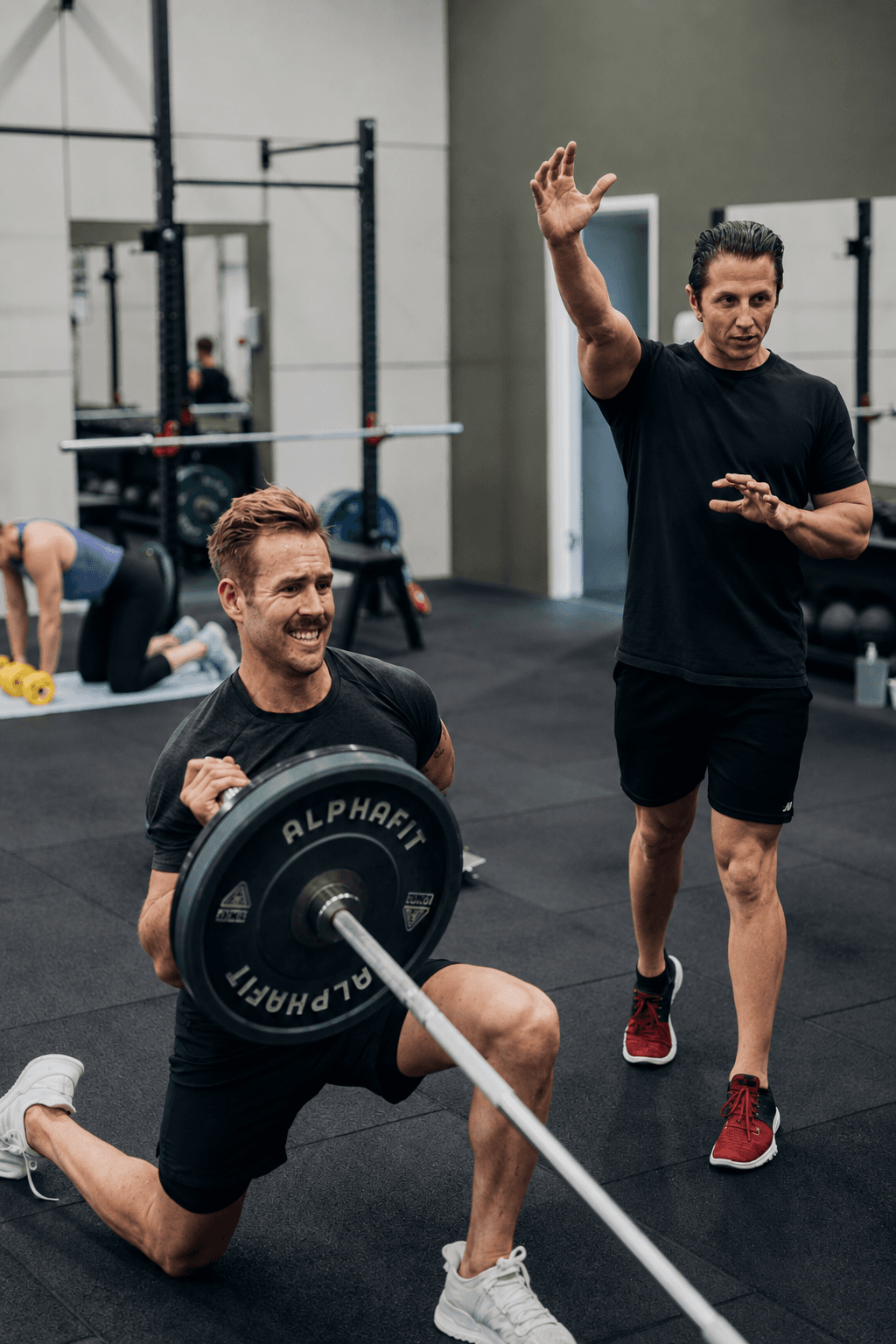
Some exercises are naturally more technically demanding than others, and that isn’t necessarily a problem. There are plenty of exercises that take time to learn but can be extremely valuable once the athlete develops the required competency. Olympic lifting variations are a good example. If they suit the athlete, the goal and the program, spending time teaching them properly can absolutely be worthwhile.
The question is whether that additional complexity gives us something we actually need. If two exercises are likely to produce a similar adaptation, but one introduces significantly more technical demand without providing a meaningful advantage, the simpler option may make more sense.
That isn’t about avoiding coaching. Part of good coaching is teaching athletes new skills and progressing them over time. It is about making sure complexity has a purpose rather than treating a more difficult exercise as automatically superior.
As the athlete develops, more advanced options may become appropriate. The exercise should become more complex because the athlete or the adaptation requires it, not simply because we can make it more complex.
The exercise also needs to work in the real world
A theoretically perfect exercise is not particularly useful if the person cannot consistently perform it. Equipment matters, training time matters, injury history matters. What exercises they enjoy or hate can matter as well, athlete adherence is much higher with a program they enjoy (if applicable).
If someone trains in a small home gym, there is no point building their program around equipment they don’t have. If an exercise consistently causes discomfort, there are usually other ways to target the same physical quality. Practicality is part of good programming, not something we consider afterwards. The best exercise on paper is not always the best exercise for the person standing in front of you.
More specific doesn’t automatically mean better
This is particularly relevant in sports performance. An exercise does not become better simply because it looks more like the sport. A golfer performing a cable rotation in a golf stance may look more “golf-specific” than a split squat, but that does not automatically make it more valuable. DON’T BE FOOLED BY SOCIAL MEDIA!
The split squat can be used to develop lower-body strength, a medicine ball throw might be there to develop rotational power and A row will develop upper-body strength.
Those exercises don’t need to resemble the golf swing because they are training physical qualities, not practising golf technique. Improving those physical qualities can give the golfer more capacity to produce force, control movement and express speed within their swing. Aka hitting the ball further or better.
Specific exercises absolutely have a place, but specificity should have a reason and an evidence-informed rationale.
So what makes an exercise good?
A good exercise should have a clear purpose, suit the person performing it and give us a reasonable way to create and progress the adaptation we want. It should also be practical enough to perform consistently and appropriate for the athlete’s current level.
That doesn’t mean every exercise needs to be basic, advanced exercises can be extremely useful for advanced athletes. But difficult does not automatically mean effective, and simple does not automatically mean basic. Remember, programming isn’t a one size fits all. Take a closer look at programming of sporting teams and you’ll notice each athlete has small variation to their training for various reasons.
So if professional athletes in the same team can have slightly different programs, shouldn’t that tell you that your program should probably reflect you as well?!
The practical takeaway
There probably isn’t one “best” exercise for most physical qualities. There are usually several exercises that could produce a similar outcome, and the job of good programming is choosing the one that makes the most sense for that person at that time.
Ask what you are trying to improve, whether the person can perform the exercise well, whether it can be progressed and whether it fits the reality of their training. If a simpler exercise can achieve the same outcome just as well, there is nothing wrong with choosing the simpler option.
Exercises are tools. The result is what matters.